
Keynote Speakers
Festival of Learning 2026 brings together leading voices in AI in Education, learning at scale, educational data mining, and human–computer interaction. Our keynote speakers will share their visions for the future of learning and technology across research, practice, and industry.
Each day of the festival will feature a keynote from one of our mother societies (AIED, EDM, L@S) or a local keynote speaker.
Unlearning Standardization: Clues from Marginalized Learners (Local Keynote | June 29, Monday)
Sooinn Lee (Co-founder & CEO, Enuma, Inc)
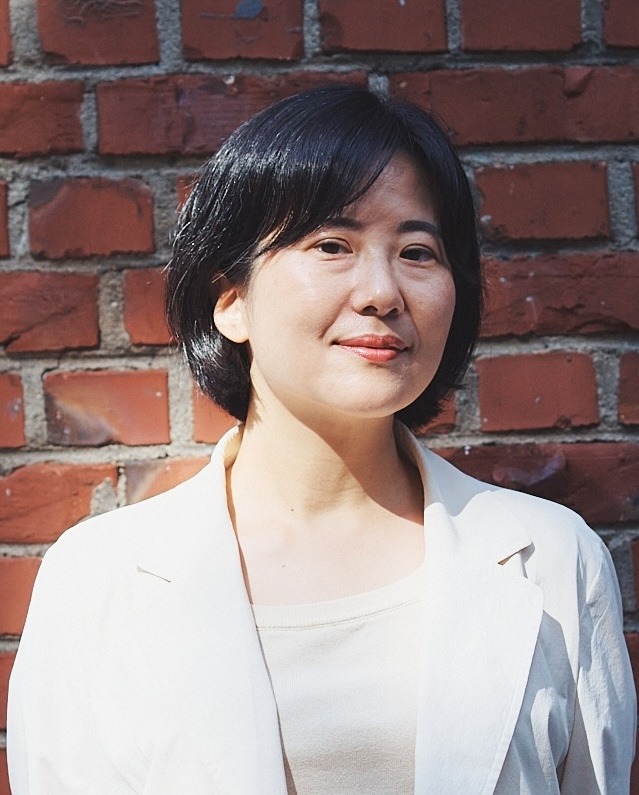
Bio: Sooinn Lee is the co-founder and CEO of Enuma, an education technology company that develops digital learning tools to help all children, including those with disabilities. Enuma’s flagship “Todo” series teaches early literacy and numeracy to 15 million users in East Asia and worldwide, while its Global Learning XPRIZE- winning Kitkit School is used globally to support basic education in underserved communities. Recently, she has led the development of AI digital textbook (AIDT) supplements for the Korean public school system, including specialized supplements for special education classrooms.
For her commitment to using technology to improve learning outcomes for marginalized children, Sooinn has been recognized as an Ashoka Fellow and named Social Entrepreneur of the Year by the Schwab Foundation (2020). She currently serves as a committee member of the Korean National Commission for UNESCO and an advisor to the National AI Strategy Committee.
ABSTRACT
At Enuma, we build digital learning products for children outside the standard system, including those with disabilities or those lacking basic learning infrastructure. By applying Universal Design for Learning (UDL) through user experience design, we work to ensure learners stay motivated while exploring various choices and learning paths. Through this work, we confronted our own biases, rooted in mainstream education, that fail a vast number of diverse learners.
As AI becomes increasingly capable of handling standardized tasks and knowledge, the industrial goal of standardization is losing its relevance. Instead, learners in the AI era will naturally be required to cultivate their unique strengths and differences. This transition challenges us to unlearn standardization itself.
What if the core concept of Special Education—providing an Individualized Education Plan (IEP) based on each student’s unique strengths and resources—could be accessible to all learners? Drawing from Enuma’s practical experience, including designing for illiterate learners and building AI Digital Supplement for special education classrooms, this keynote will share clues on how mainstream education might evolve.
AI for Reskilling and Upskilling (L@S Keynote | June 30, Tuesday)
Ashok Goel (Georgia Institute of Technology)

Bio: Ashok Goel is a Professor of Human-Centered Computing in the School of Interactive Computing at Georgia Institute of Technology and the Chief Scientist with the Center for 21st Century Universities in Georgia Tech’s College of Lifetime Learning. For about forty years, he has conducted research on cognitive systems at the intersection of AI and cognitive science, focusing on computational design and creativity. Over the last two decades, his research has increasingly focused on AI in education and education in AI. Ashok is a Fellow of AAAI and the Cognitive Science Society, an Editor Emeritus of AAAI’s AI Magazine, a recipient of AAAI’s Robert Engelmore Award, Outstanding AI Educator Award, Distinguished Service Award, and multiple IBM Faculty Awards. He is the Director of Georgia Tech’s Design Intelligence Laboratory (dilab.gatech.edu), and the Executive Director of the National AI Institute for Adult Learning and Online Education (aialoe.org) sponsored by the United States National Science Foundation.
ABSTRACT
As AI becomes increasingly powerful and ubiquitous, it is disrupting skills and displacing workers. At the National AI Institute for Adult Learning and Online Education (AI-ALOE) sponsored by the United States National Science Foundation, we posit that AI can be part of the solution to the growing problem if we can use AI for reskilling, upskilling, and workforce development at scale. The long-term vision of AI-ALOE is to develop and use AI technologies to enhance the proficiency of online education for adult learners, using in-person education as a benchmark. The day-to-day mission of AI-ALOE is to conduct responsible research into AI that is grounded in theories of human cognition and learning and derived from the scientific process of learning engineering. I will describe ongoing research at AI-ALOE on using AI for reskilling and upskilling, including Jill Watson, which started as a virtual teaching assistant a decade back and has since grown into a cognitive partner; Ivy, a new video coach based on a deep understanding of procedural skills; and A4L, a novel data architecture for supporting AI-augmented learning at scale.
Empowering People to Learn: Inclusive Human-Data Interaction in an AI-Driven World (EDM Keynote | July 1, Wednesday)
Bongshin Lee (Yonsei University)

Bio: Bongshin Lee is a Professor in the Department of Computer Science and Engineering at Yonsei University, Korea. Prior to joining Yonsei in March 2024, she spent 17 years as a researcher at Microsoft Research in the United States. Her research spans data visualization, human-computer interaction (HCI), and human-data interaction, with the overarching goal of empowering people to achieve their goals by leveraging data, visualization, and technological advances. Bongshin currently serves as Chair of the IEEE VGTC (Visualization and Graphics Technical Community) and has held numerous leadership roles in the visualization and HCI communities. She served on the VIS Executive Committee and the ISS Steering Committee, and was General Co-Chair for ISS 2019 and PacificVis 2017. She also served as Overall Papers Co-Chair for VIS 2021 and 2022, and as Papers Co-Chair for CHI 2025 and InfoVis 2015 and 2016. Her pioneering research contributions have been recognized through induction into the IEEE Visualization Academy (2020), the IEEE VGTC Visualization Technical Achievement Award (2024), and election as an ACM Distinguished Member (2025). Her dedicated service and community leadership were further honored with the IEEE Golden Core Member Award (2026).
ABSTRACT
Data and AI increasingly shape how we make decisions, manage our health, understand the world around us, and learn. From wearable sensors and health trackers to personalized dashboards and AI-powered assistants, data has become deeply embedded in everyday life. Data visualization has long served as a powerful means of understanding data and a compelling medium for data-driven storytelling. In this talk, I introduce Human-Data Interaction (HDI) as an essential bridge between data, meaningful insight, and informed action, reflecting on the evolution of my research from data visualization toward a broader exploration of HDI. I will discuss how HDI can empower people to learn from data through reflection, sensemaking, and action. I will also highlight opportunities to help make these data experiences more accessible and inclusive for people with diverse abilities and needs.
How Best to Harness AI’s Great Potential to Improve Education? (AIED Keynote | July 2, Thursday)
Vincent Aleven (Carnegie Mellon University)

Bio: Vincent Aleven is a Professor of Human-Computer Interaction at Carnegie Mellon University. As the head of the Creating Adaptive Tutoring Software (CATS) Lab, he investigates how AI can enhance education. His lab focuses on prototyping new designs for the smart classroom, with projects ranging from optimizing the design of AI-based tutoring systems, to a real-time mixed-reality teacher awareness tool, to easy-to-use authoring tools for creating AI-based tutoring systems. His work builds on cognitive theory and theories of self-regulated learning and helps extend the empirical science of how people learn with adaptive learning technologies. He has over 300 publications, is co-editor-in-chief of the International Journal of Artificial Intelligence in Education, received over 25 major research grants, and won 12 best paper awards at international conferences.
ABSTRACT
AI has tremendous potential to improve education. For example, a substantial amount of scientific evidence shows that AI-based tutoring systems can help students learn better than other forms of instruction. Also, some scientific evidence suggests that AI-based tutoring systems can help reduce inequalities in the educational system, even if not all available evidence points in this direction.
Yet, in the US, standardized test scores are stagnant, including in K-12 mathematics learning, where AI-based tutoring systems are often used. Nor is there evidence that existing inequalities within the educational system are shrinking. These results are beginning to lead to calls to outlaw the use of computers in classrooms, in the US and elsewhere.
How might we reconcile these seemingly opposing views from research and educational practice? More importantly, what might researchers do to help improve educational outcomes? We propose that it is important to focus on creating favorable circumstances for the use of AI-based tutoring systems. To this end, it is productive to view the smart classroom as a socio-technical ecosystem with many stakeholders: students, in the first place, and “facilitators” such as teachers, peers, human tutors, and parents/caregivers. By carefully designing human-AI interactions to support these stakeholders, we stand a good chance to harness AI’s great potential to improve education and reduce educational inequalities. We illustrate this vision with several example projects and promising empirical results from our lab. In these projects, students use AI-based tutoring software and facilitators are helped by a variety of novel AI-based tools, including as a mixed-reality analytics-based awareness tool for teachers, support for goal setting for students, and small-dosage AI-supported remote human tutoring.